| April 2011 | Issue 8 |
 |
Avoiding Unnoticed and Unwanted Decision-making Excursions
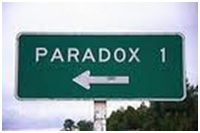 All boards have norms of behaviour. These are seldom explicitly articulated or documented. One of the most common is the norm of conflict minimisation the consequences, of which, are often some form of 'group think'. Groupthink typically occurs where there is insufficient challenge to the emergent thinking of a board and poor decision-making is often the result.
A particular variation on this phenomenon is when board members all agree, inadvertently, to do something that none of them, individually, would have chosen. In doing so, they combine to act in a manner that is simply dumb and defeats the very purposes they are trying to achieve. Some time ago Jerry Harvey christened this 'the Abilene Paradox.' (1). His acute personal observation of this phenomenon was recently highlighted in another publication (2) and we think our readers would also benefit from Harvey’s insight to the experience of his own family.
On a hot afternoon in Coleman, Texas, the Harvey family was comfortably playing dominoes on a well ventilated porch, when Jerry’s father-in-law suggested that they take a trip to Abilene (53 miles further north) for dinner. His wife said, "Sounds like a great idea." Jerry, despite having reservations because the drive will be long and hot, thought that his preferences must be out-of-step with the rest of the family group and said, "Sounds good to me. I just hope your mother wants to go." His mother-in-law then said, "Of course I want to go. I haven't been to Abilene in a long time."
The drive was long, hot, and dusty. When they arrived at the cafeteria, the food was as bad as the drive. Four hours and 53 miles later they arrived back home, exhausted.
To be sociable Jerry commented, "That was a great trip, wasn't it?" His mother-in-law responded that, actually, she would rather have stayed home. She only went along with the idea because the other three family members were so enthusiastic. Jerry responded, "I didn’t want to go, I was happy on the porch playing dominoes. I only went to satisfy the rest of you." His wife said, "I just went along to keep you happy. I would have had to be crazy to want to go out in the heat like that." Jerry’s father-in-law then admitted that he only suggested it because he thought the others might be bored.
The group sat back in silence, perplexed that they together decided to take a trip which none of them wanted. They would each have preferred to sit comfortably at home, but did not admit to it when they still had time to enjoy the afternoon. They had just done the opposite of what they each wanted to do.
Many boards and organisations have been caught in similar situations. However, the negative consequences of such ‘trips’, measured in terms of economic loss and human misery, are typically much greater than for Harvey’s little family group.
Harvey argues that it is the group’s inability to manage agreement – rather than its inability to manage conflict- that is the essential symptom of the Abilene Paradox. In the boardroom environment, however, it is likely that the trigger is, more often than not, conflict avoidance.
What happens?
- Board members fail to accurately communicate their desires and/or beliefs to one another. This may sometimes be a consequence of a lack of confidence in their own viewpoint but it is often to avoid upset or conflict ("I didn't want to say anything for fear of hurting Joan’s feelings!") The result, however, might be exactly the opposite.
- The receipt of invalid and inaccurate information leads board members to make collective decisions that are contrary to their individual judgments. It likely also produces results that are counterproductive to the organisation's intent and purposes.
- As a result board members often experience frustration, anger, irritation, and dissatisfaction with their colleagues. Consequently, they form subgroups with trusted colleagues within the board and blame other individuals, subgroups or management, for the board’s dilemma.
- If board members do not deal with the generic issue – whether, as Harvey suggests, that be a problem in knowing what has been agreed, or whether it be the inability to deal with conflict avoidance - the cycle repeats itself perhaps with even greater intensity.
The greatest protection against getting caught in the web of the Abilene Paradox is to become aware of the tendency for groups to embark on these types of decision-making excursions. When your board is next faced with a significant decision, perhaps you should ask your colleagues. "We seem to be in agreement but could it be that we are really heading to Abilene?"
(1) Jerry B. Harvey (1988) The Abilene Paradox and Other Meditations on Management. Lexington, Mass., Lexington Books.
(2) Master Facilitator Journal. Issue 487, 3 May 2011.
BoardWorks International is a specialist governance effectiveness consultancy dedicated to assisting governing boards to provide effective strategic leadership to their enterprises and to fulfil their fiduciary and stewardship responsibilities to their stakeholders. It is also our aim to make 'board work' a satisfying and enjoyable experience for all who serve on or provide support to, governing boards.