| October 2010 | Issue 5 |
 |
What Are You Doing To Help Your Chief Executive Manage Stress?
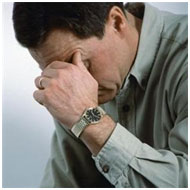 It was a sign of the times when I was recently asked to lead a discussion with a group of board chairs concerned about the potential for stress among their chief executives. As representatives of boards aspiring to be good employers these chairs were keen to learn more about how to recognise and deal effectively with signs of chief executive stress. I was delighted to contribute to the discussion because the type of macho stereotypes that persist in our corporate world, are extremely unhelpful, if not downright dangerous.
The first thing to note is that incentives are high indeed for chief executives to deny fallibility and stress. Chief executives tend to be very reluctant to show any signs of weakness to anyone and to their boards, in particular. The chief executive’s role and responsibilities are inherently stressful. As well, in our modern world, organisational change with all the challenges involved in adapting to a constantly changing environment, has become 'business as usual'. At the extreme, burnout does occur and can destroy individuals and organisations. However, the signs are usually apparent, well before such a serious (and possibly irrecoverable) state is reached.
My comments to the group of chairs, reflected in this article, were based on long observation of client boards and their chief executives and the opportunities to share my own experiences with them. Please note, however, what follows is not specialised medical advice - which should be sought in particular circumstances.
Typical signs of chief executive stress
These often revolve around the classic human responses to stress: fight or flight.
In terms of the former, the type of chief executive behaviours often observed in the boardroom includes:
- increased irritability and impatience
- aggressive defensiveness
- argumentativeness and a compulsion to win every argument; to increase levels of control
- excuses and a tendency to try and blame others - including the board - when things don't go well
- agitation
- increased anxiety - a sense that there is 'too much to do and too little time to do it in'
- a loss of perspective -becoming easily distracted and losing focus on important matters
- impulsiveness
Flight-type responses are also common. We see these in:
- reduced pushback on matters that the board has previously been told were important
- lethargy - reduced enthusiasm and energy in the chief executive's personal demeanour
- avoidance and withdrawal - reduced communication and a reluctance to raise or discuss difficult issues
- a sense of helplessness and a lack of ideas on what to do next. The sense conveyed to the board is that the mountain has become too big to climb.
Other symptoms to be alert to that might not be as easily classified as ‘fight’ or ‘flight’ include the chief executive’s:
- excessive tiredness
- reduced confidence and decisiveness
- loss of concentration and even memory loss
- tendency to make mistakes, to be accident prone
Boards might also observe that:
- it takes longer to get things done
- the chief executive suffers from an increased incidence of physical health problems
- there is an increase in an addictive behaviour including the abuse of alcohol
- there are reports of erratic behaviour in public and in meetings with stakeholders.
It is very easy for boards observing these types of behaviours to conclude that their chief executive has either ‘lost the plot’ or is not up to the demands of the job. Too often there is a tendency to jump to the conclusion that there is only one solution –to exit the chief executive from the position. Switching chief executives is frequently very expensive and should only be considered as a last resort. When observing stress in its chief executive, more often than not, however, the board’s starting point should be with its own performance.
What is the board doing to increase/reduce stress?
Is the board making what is important clear? A common source of chief executive stress is a board’s failure to speak with one voice about performance expectations. Chief executives are pulled in different directions by the personal agendas of different board members. A related problem is a board’s inability to prioritise. Their strategic plans are little more than a lengthy (and unrealistic) ‘wish list’. To address this problem conduct a joint analysis of the pressure points, the aim being to help the chief executive to have a greater sense of being in control and of the job being ‘doable’.
- What is really important?
- Is the board agreed on priorities?
- Are the priorities achievable with the resources available?
- Do you have the right performance measures?
Given his experience (and those around her), is it realistic for the chief executive to be totally on top of this job? This is often a problem in not-for-profits and in smaller start-ups in the private sector. It is common in those situations that the chief executive is relatively inexperienced as a general manager and in dealing with a board. As such they may have a relatively immature, heroic view of the role - they think they are expected to know everything and to have all the answers. Related to this is an often desperate desire to please the board or even a sense that they need to ‘manage’ the board.
A good part of the solution is for the board to recognise the risks in an inexperienced chief executive, be supportive and resist rushing to premature, negative, judgements about the chief executive’s competence. Chief executives inexperienced in this way can be greatly assisted by mentoring that helps them to take a more realistic and pragmatic approach to their role. Encourage the chief executive to find someone with appropriate experience, preferably outside the board, and the organisation. This is the type of person who can help them understand their situation and to develop options for handling it.
Be aware that when this type of situation is compounded by a board’s (and particularly its chair’s) own inexperience, there is some coaching/mentoring required at that level as well. In fact, the board chair is perhaps the critical element in dealing with chief executive stress. It is important, in the first instance, to understand when the chief executive is under stress. Because of their comparatively frequent interaction with their chief executive, chairs are likely to have more opportunity to observe chief executive stress levels. Recognising that some directors who see signs of chief executive weakness, often become like the proverbial sharks that smell blood, chairs can, if necessary, run interference with their board. Chairs can help their board, collectively, to understand that now is not the time to question whether you have the right chief executive. No chief executive is perfect and the board has probably made a big investment in the one it already has. As much as anything else the chair needs to have the board understand that undue stress has a negative impact on performance and adding more will simply exacerbate the problem. It is rarely, if ever, the right response to conclude that the chief executive simply needs to ‘toughen up’. A more appropriate and effective response is to ask questions such as:
- Are we creating a safe environment in which our chief executive can do her best work?
- Are there any unnecessary pressures we are putting on the chief executive?
- What are the ingredients needed to ensure that our chief executive is successful?
- Are we focused on moving forward and finding solutions or are we looking back and ascribing blame, looking to punish rather than learn?
- Are we incentivising the wrong types of behaviour (e.g. hiding rather than sharing bad news)?
Inherent in these questions is the board’s responsibility (a legal one in some jurisdictions) for the ‘pastoral care’ of their employee. This means having regard for the person as well as the position. This is not just a functional/transactional relationship. Board members should think more often than many do about ‘how would I feel if I was in the chief executive's shoes. Is the way I would like to be treated?’
To conclude, the message of this article is that boards should be alert to undue stress in their chief executive and to understand that the board itself may be a key source of that stress. As part of their employment responsibilities, as well as their ultimate responsibility for organisational well being, this risk is something that should be high in the consciousness of every board.
BoardWorks International is a specialist governance effectiveness consultancy dedicated to assisting governing boards to provide effective strategic leadership to their enterprises and to fulfil their fiduciary and stewardship responsibilities to their stakeholders. It is also our aim to make 'board work' a satisfying and enjoyable experience for all who serve on or provide support to, governing boards.